

If you’re searching for the best organic decaf coffee, you likely care about more than just flavor — you care about clean ingredients, mold-free testing, and a chemical-free decaffeination process. After years of researching clean coffee options for my wellness routine, I finally found a biodynamic decaf that checks every box: organic, Swiss Water Process decaffeinated, third-party tested for mold, and incredibly smooth. In this guide, I’m sharing why this is my top pick for the best organic decaf coffee in 2026 — especially for those committed to clean living, hormone balance, and reducing toxin exposure without giving up their daily coffee ritual.
* This post may include affiliate links. This means that products purchased from certain links will generate a small commission (At no extra cost to you). As always, I will only recommend brands that have passed my seal of approval and that I truly love. Thank you for supporting this little holistic space on the internet. *
* Information in this post is not professional medical advice and should not be relied on or used in place of consultation with healthcare professionals. Should you have any medical questions, please consult your primary healthcare provider. **
What Makes the Best Organic Decaf Coffee?
When evaluating the best organic decaf coffee, it’s important to look beyond taste alone. The quality of the beans, the farming practices, how the caffeine is removed, and whether the coffee is tested for mold and contaminants all play a major role. Many decaf coffees on the market are labeled “organic,” but that doesn’t automatically make them clean or low-toxin. The best organic decaf coffee should be made from high-quality, organically grown beans, decaffeinated using a chemical-free process, and ideally tested for mold and mycotoxins. For those of us committed to clean living, these standards ensure that our daily coffee ritual supports wellness instead of undermining it.
Why Organic Matters in Decaf Coffee
Choosing organic is especially important when it comes to decaf. Conventional coffee is one of the most heavily sprayed crops in the world, and those pesticide residues can remain on the beans long before the decaffeination process begins. When searching for the best organic decaf coffee, organic certification helps reduce exposure to synthetic pesticides, herbicides, and chemical fertilizers. Since decaf coffee goes through an additional processing step to remove caffeine, starting with organically grown beans is critical. Organic farming practices also support healthier soil, cleaner water systems, and higher-quality beans — all of which contribute to a cleaner, smoother cup of decaf.
The Problem With Conventional Decaffeination Methods
Not all decaf coffee is created equal. Many conventional decaffeination methods use chemical solvents such as methylene chloride or ethyl acetate to strip caffeine from the beans. While some brands claim residue levels are minimal, many clean living consumers prefer to avoid these solvents altogether. If you’re looking for the best organic decaf coffee, it’s essential to understand how your coffee is processed. Chemical-based decaffeination can compromise both the purity and flavor of the final product. For those prioritizing toxin reduction and long-term wellness, choosing a decaf that avoids chemical solvents is a smarter and more aligned option.
Swiss Water Process vs Chemical Decaf
When comparing options for the best organic decaf coffee, the Swiss Water Process stands out as one of the cleanest and most trusted methods. Unlike chemical solvent methods, Swiss Water decaffeination uses only water, temperature, and time to gently remove caffeine while preserving flavor compounds. This process eliminates 99.9% of caffeine without introducing synthetic chemicals. The result is a smooth, full-bodied decaf that maintains the integrity of the bean. For anyone committed to clean living, hormone balance, and reducing unnecessary toxin exposure, choosing a Swiss Water Process decaf is one of the most important factors in selecting the best organic decaf coffee.
Why Biodynamic Is the Gold Standard for the Best Organic Decaf Coffee
When searching for the best organic decaf coffee, it’s not enough to look for just “organic” labeling. Biodynamic coffee takes clean living and sustainability a step further, combining organic farming with regenerative practices that support soil, water, and ecosystem health. Biodynamic farms follow a holistic approach that prioritizes the balance of the farm as a living organism — from planting cycles aligned with lunar phases to composting and biodiversity. For coffee lovers committed to wellness, this extra level of care translates into cleaner, higher-quality beans, better flavor, and a coffee experience that supports both your health and the planet.
What Is Biodynamic Coffee?
Biodynamic coffee is grown using principles first developed by Rudolf Steiner, which emphasize a holistic, self-sustaining ecosystem. Farms operate almost like a living organism, where crops, soil, animals, and composting work together to naturally nourish the land. Unlike conventional or even standard organic farming, biodynamic practices often include lunar planting calendars, herbal preparations for soil health, and attention to the overall vitality of the farm ecosystem. Choosing biodynamic coffee ensures that the beans you drink are grown in harmony with nature, without synthetic chemicals or industrial shortcuts. When it comes to the best organic decaf coffee, biodynamic coffee represents the pinnacle of clean, conscious farming.
Biodynamic vs Organic Coffee: What’s the Difference?
While all biodynamic coffee is organic, not all organic coffee is biodynamic. Organic certification focuses primarily on avoiding synthetic pesticides, herbicides, and chemical fertilizers, ensuring the coffee is safer for consumption. Biodynamic certification goes further by requiring farms to follow regenerative, holistic practices that promote ecosystem health and soil vitality. In practice, this means biodynamic coffee often has higher nutrient density, fewer contaminants, and more complex flavor profiles. If you’re seeking the best organic decaf coffee, biodynamic beans are the next level — clean, chemical-free, and grown to support wellness from the ground up.
Why Biodynamic Farming Produces Cleaner Coffee
Biodynamic farming isn’t just good for the planet — it’s better for your body. Because the soil is rich, diverse, and free from synthetic chemicals, the coffee plants naturally produce beans with fewer toxins and lower mycotoxin levels. This is particularly important for decaf coffee, which goes through additional processing to remove caffeine. Starting with the cleanest possible beans ensures that the final product is chemical-free, smooth, and nourishing. For those committed to clean living, hormone balance, and overall wellness, biodynamic coffee delivers the cleanest, highest-quality decaf option — making it the gold standard among the best organic decaf coffee selections available today.
Organic vs Biodynamic Coffee Comparison: What Makes Biodynamic Superior
When searching for the best organic decaf coffee, it’s important to understand that not all “organic” coffees are created equal. While organic certification ensures beans are grown without synthetic pesticides or chemical fertilizers, biodynamic coffee takes clean living a step further. Biodynamic farms follow holistic, regenerative practices that support soil vitality, ecosystem health, and overall bean quality. To help you see the difference at a glance, the table below breaks down organic vs biodynamic coffee across certification standards, farming practices, flavor, and health benefits — so you can make a truly informed choice for your clean living lifestyle.
| Feature | Organic Coffee | Biodynamic Coffee |
|---|---|---|
| Certification | USDA Organic certified | USDA Organic plus Demeter Biodynamic certified — meets all organic standards and adds holistic farm practices |
| Pesticides / Chemicals | No synthetic pesticides, herbicides, or fertilizers | Same chemical-free standards as organic plus naturally enhanced soil and plant vitality |
| Farming Approach | Chemical-free farming | Holistic, regenerative farming — the farm is treated as a living ecosystem |
| Soil Health | Maintained through crop rotation and compost | Enhanced through composting, biodiversity, and lunar planting cycles |
| Ecosystem Impact | Reduces chemical runoff, supports basic biodiversity | Promotes fully self-sustaining ecosystems with plants, animals, and microorganisms |
| Nutrient Density & Bean Quality | High-quality beans with fewer contaminants | Potentially higher nutrients, richer flavor, lower mycotoxins — coffee that nourishes your body and supports wellness |
| Flavor Profile | Clean, consistent taste | More complex, vibrant, and full-bodied — often preferred by coffee enthusiasts |
| Sustainability | Environmentally friendly | Regenerative farming improves long-term land and ecosystem health |
| Ideal For | Anyone looking for chemical-free coffee | Wellness-focused individuals, clean living enthusiasts, and those seeking the best organic decaf coffee for taste and health |
Key Takeaway:
While organic coffee removes harmful chemicals, biodynamic coffee does everything organic does and more — supporting soil vitality, ecosystem health, and nutrient-rich, mold-free beans. For anyone seeking the best organic decaf coffee, biodynamic coffee is the gold standard for clean living, flavor, and wellness benefits.
Best Organic Decaf Coffee vs Other Decaf Brands
When choosing the best organic decaf coffee, it’s easy to get overwhelmed by the variety of brands on the market. Many decaf options are labeled organic or low-acid, but few go the extra mile to combine biodynamic farming, Swiss Water Process decaffeination, and mold-free testing. Comparing these factors side by side makes it clear why certain biodynamic brands rise above the rest. By choosing a decaf that prioritizes clean living, toxin-free beans, and smooth flavor, you’re not just enjoying coffee — you’re making a conscious wellness choice that supports your body, hormones, and overall health.
Biodynamic vs Regular Organic Decaf
While both biodynamic and organic coffees avoid synthetic pesticides and fertilizers, biodynamic coffee does everything organic does and more. Biodynamic farms follow holistic, regenerative practices that improve soil quality, ecosystem health, and bean vitality. Organic decaf ensures chemical-free beans, but it doesn’t address the broader environmental and nutritional benefits offered by biodynamic farming. For anyone seeking the best organic decaf coffee, biodynamic options deliver cleaner, more nutrient-rich beans with richer, more complex flavors — making them the superior choice for wellness-focused coffee lovers.
Mold-Free Coffee vs Standard Coffee
Mold in coffee is an often-overlooked factor that can affect digestion, inflammation, and overall wellness. Many conventional decaf coffees do not test for mold or mycotoxins, which can compromise quality. Mold-free biodynamic decaf coffee goes the extra mile by ensuring that beans are safe and clean from harmful toxins. When selecting the best organic decaf coffee, choosing mold-free options provides peace of mind and supports a healthy daily ritual, making your coffee not just enjoyable, but truly aligned with clean living values.
Price Comparison: Is It Worth It?
Many people assume biodynamic, mold-free decaf comes with a hefty price tag, but the best organic decaf coffee doesn’t have to break the bank. The brand I recommend most is priced very similarly to standard organic decaf — yet it delivers far more benefits, including Swiss Water Process decaffeination, mold-free testing, and biodynamic farming practices. Even better, with my exclusive biodynamic coffee discount code (see below), it’s more affordable than ever to enjoy a cleaner, smoother, and better-tasting cup every day. For anyone focused on clean living, hormone balance, and overall wellness, this makes choosing the best organic decaf coffee an easy, budget-friendly, and worthwhile decision.
Best Organic Decaf Coffee (2026): The Biodynamic Brand I Recommend
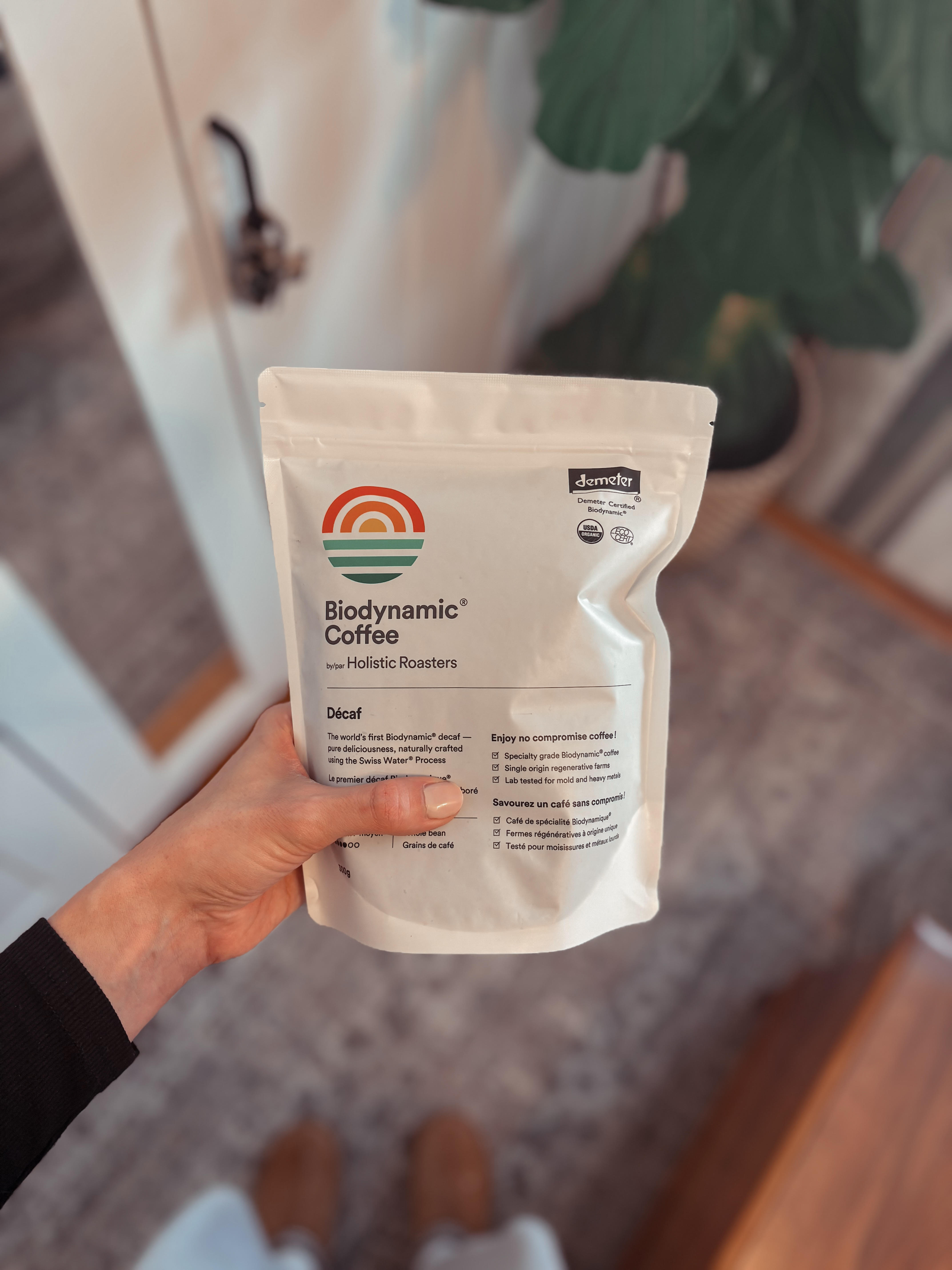
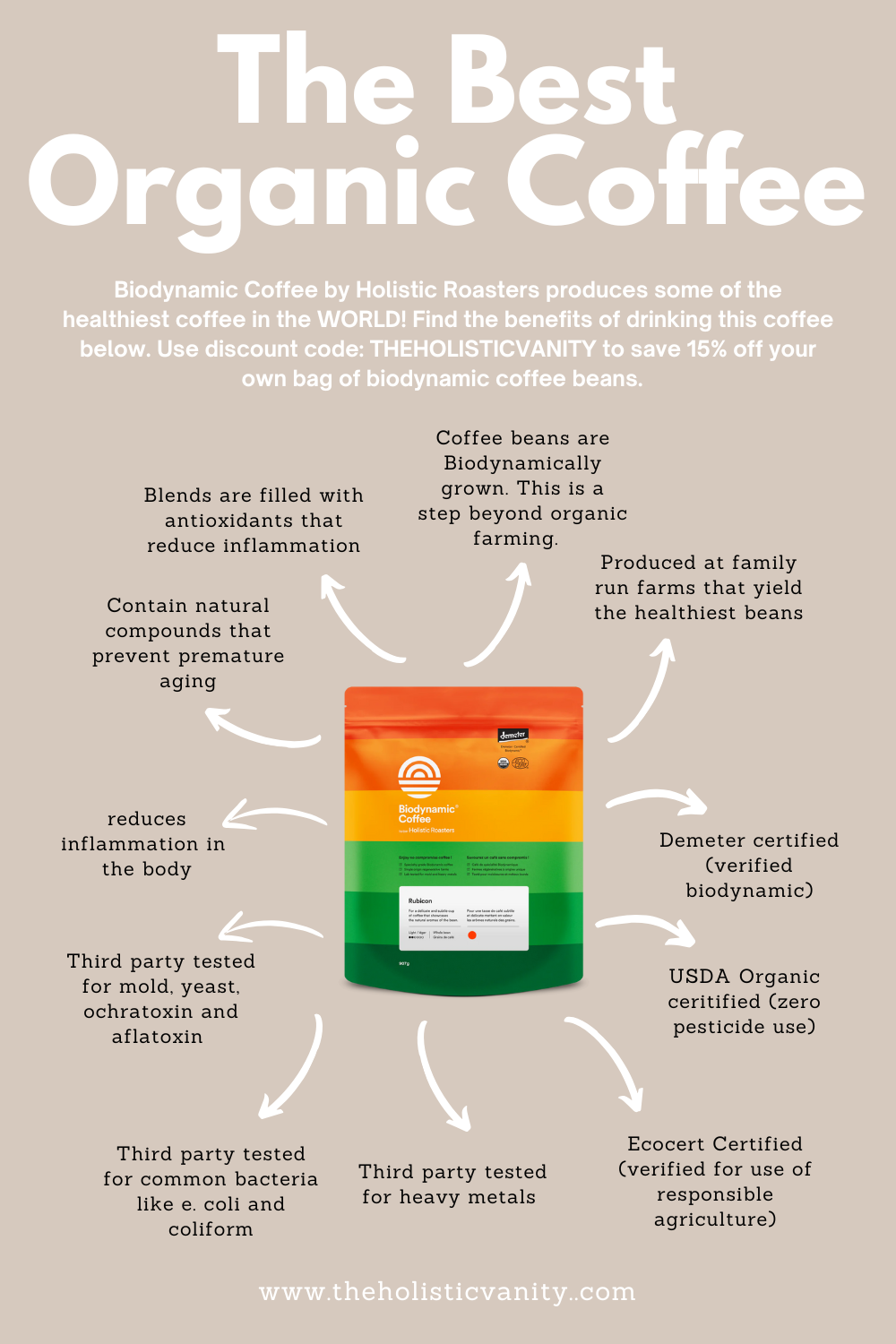
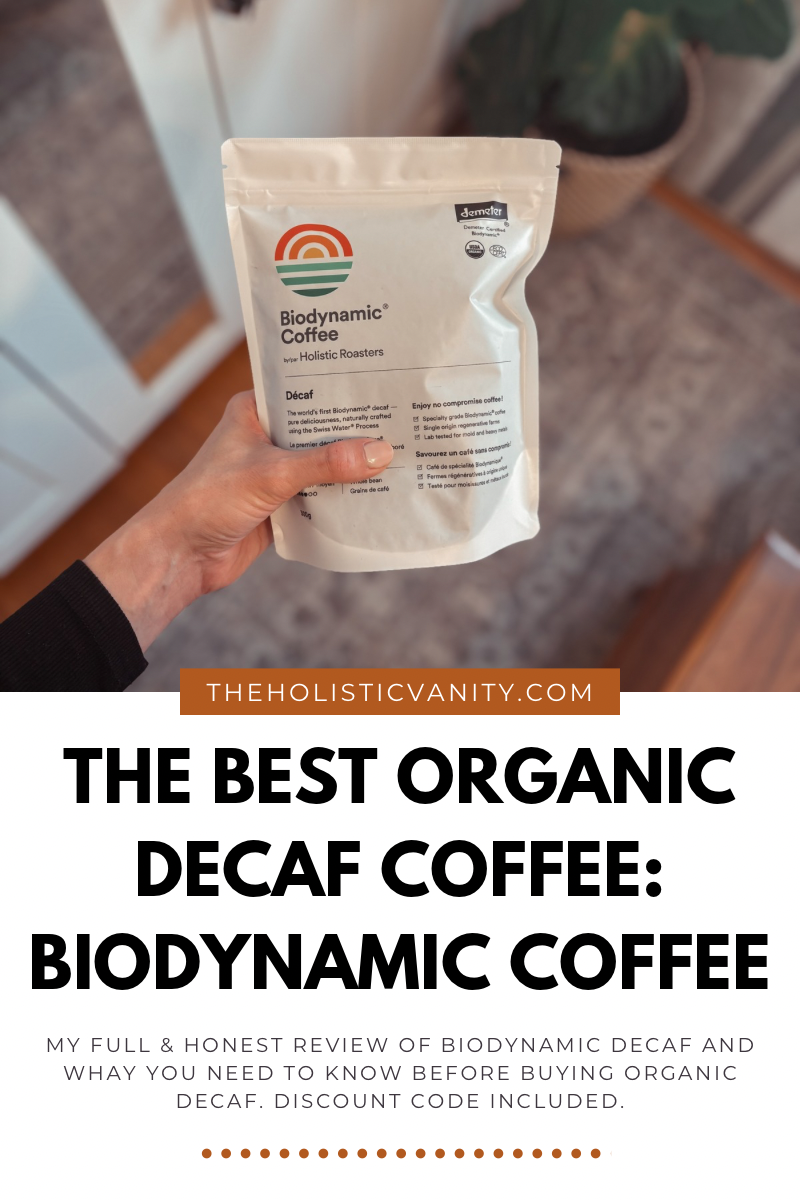
After testing countless decaf coffees, the one I confidently recommend as the best organic decaf coffee for clean living is Biodynamic Coffee by Holistic Roasters— a biodynamic, Swiss Water Process decaf that checks every box for wellness, flavor, and toxin-free enjoyment.
Why This Is the Best Organic Decaf Coffee for Clean Living
What sets this biodynamic decaf apart is that it combines organic certification with Demeter Biodynamic certification, meaning the beans are grown in a regenerative, chemical-free ecosystem. Every sip supports your wellness routine, reducing exposure to pesticides, mold, and other toxins that can accumulate in conventional decaf coffee. For anyone focused on clean living, hormone health, and gut-friendly habits, this is the decaf I reach for daily.
Mold-Free Testing + Swiss Water Process: Chemical Free Decaf
This decaf is third-party tested for mold and mycotoxins, a step many brands skip. Mold in coffee can affect digestion, inflammation, and overall wellness, so having a mold-free guarantee is a huge advantage. On top of that, the Swiss Water Process gently removes caffeine without any chemical solvents, leaving you with a smooth, full-bodied cup that’s safe, clean, and flavorful — perfect for your morning ritual.
Flavor, Acidity & Smoothness Review
Taste matters as much as purity. Biodynamic coffee by Holistic Roasters delivers a naturally rich, low-acid profile that’s smooth on the palate without bitterness or harsh aftertaste. Even coffee lovers who typically prefer regular caffeinated brews will enjoy the flavor. For clean living enthusiasts, low-acid coffee is easier on digestion and supports consistent wellness habits without compromising on enjoyment.
Why I Recommend Biodynamic Coffee by Holistic Roasters
From my experience, this decaf isn’t just a beverage — it’s a holistic wellness choice. It aligns with a clean living lifestyle, supports hormonal balance, and satisfies the taste expectations of even the most discerning coffee drinkers. That’s why, after testing multiple options, I confidently declare Biodynamic Coffee by Holistic Roasters the best organic decaf coffee of 2026.
Who Should Drink the Best Organic Decaf Coffee?
The best organic decaf coffee isn’t just for anyone looking to cut caffeine — it’s for anyone who values clean living, wellness, and better-for-you ingredients in their daily routine. This includes women 35+ who are navigating hormonal changes, perimenopause, or shifts in energy and metabolism. Low-toxin, mold-free decaf helps support digestion, reduces inflammation, and allows you to enjoy the ritual of coffee without overloading your body with caffeine or chemical residues.
It’s also ideal for those who have experienced sensitivity to caffeine but don’t want to give up the flavor, comfort, and ritual of their morning cup. With Swiss Water Process decaffeination and biodynamic farming practices, the best organic decaf coffee delivers smooth, full-bodied flavor while supporting overall wellness.
Finally, clean living enthusiasts who prioritize toxin-free food and beverages will benefit from choosing a biodynamic, mold-free decaf. Unlike standard decaf options, this coffee is carefully tested for contaminants and grown using regenerative, chemical-free practices. This makes it a smarter choice for your body, hormones, and long-term health.
In short, the best organic decaf coffee is for anyone who wants to enjoy coffee without compromise — flavor, safety, and wellness all in one cup.
Final Verdict: The Best Organic Decaf Coffee for Clean Living
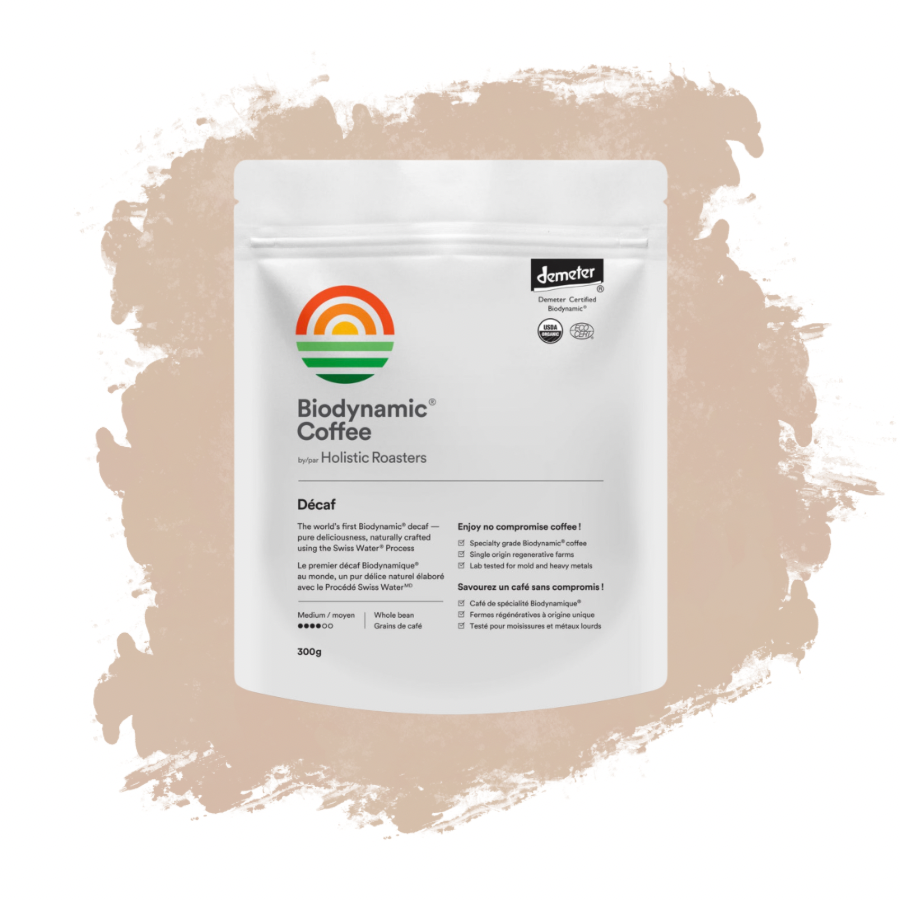
After testing dozens of decaf coffees, it’s clear that for anyone committed to clean living, wellness, and toxin-free coffee, there’s one standout: Biodynamic Coffee by Holistic Roasters. This is the best organic decaf coffee I’ve found in 2026 — not just for its rich, smooth flavor, but for its holistic approach to coffee production.
From USDA Organic and Demeter Biodynamic certification to Swiss Water Process decaffeination and mold-free testing, every cup is crafted with your health and wellness in mind. Unlike standard decaf, it delivers a clean, full-bodied coffee experience while supporting digestive comfort, hormone balance, and a low-toxin lifestyle.
Even better, Biodynamic Coffee by Holistic Roasters is surprisingly affordable — especially when you use my exclusive discount code. This makes it easy to enjoy a daily coffee ritual that supports clean living without compromising on taste or quality.
Whether you’re a wellness enthusiast, navigating hormonal changes, or simply looking to switch to a clean, chemical-free decaf, this biodynamic option is the easiest, most enjoyable way to upgrade your coffee routine.
Biodynamic Coffee Discount Code
I’m so excited to share my favorite best organic decaf coffee with you — Biodynamic Coffee by Holistic Roasters — and my exclusive discount code makes it even easier to try. With my code, you can enjoy this smooth, low-acid, Swiss Water Process decaf at a special price.
If you’ve been wanting a clean, chemical-free coffee that’s gentle on digestion, hormone-friendly, and full of flavor, this is the perfect time to try it. Trust me, once you taste it, you’ll see why I recommend it as the best organic decaf coffee for clean living.
👉 Use my exclusive Biodynamic Coffee Discount code: THEHOLISTICVANITY to get your Biodynamic Coffee HERE today!
Where to Buy the Best Organic Decaf Coffee
If you’re ready to try the best organic decaf coffee, I’ve made it easy to shop my top picks. Below, you’ll find Biodynamic Coffee by Holistic Roasters, including both their classic coffee and their brand-new decaf — all linked directly to their site. Using my exclusive discount code (THEHOLISTICVANITY), you can enjoy clean, mold-free, Swiss Water Process coffee at a great price. Whether you’re upgrading your morning routine or trying decaf for the first time, these options make it simple to drink delicious, chemical-free coffee while supporting your wellness goals.
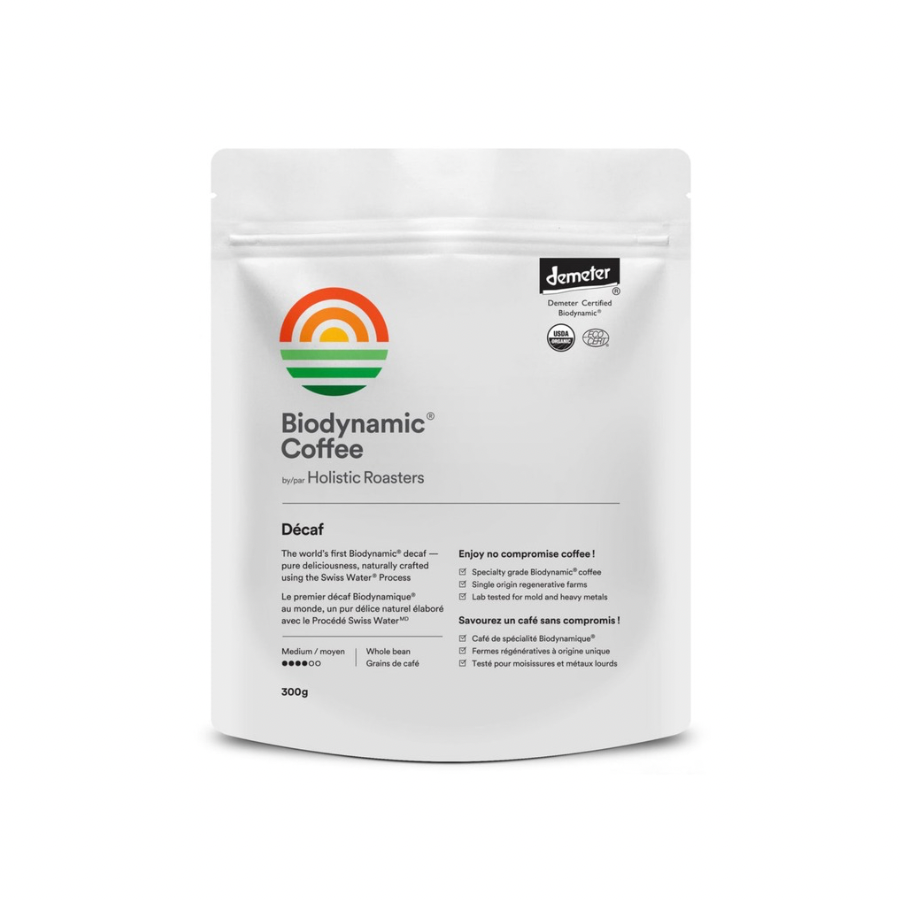
Biodynamic DECAF coffee – 300g.
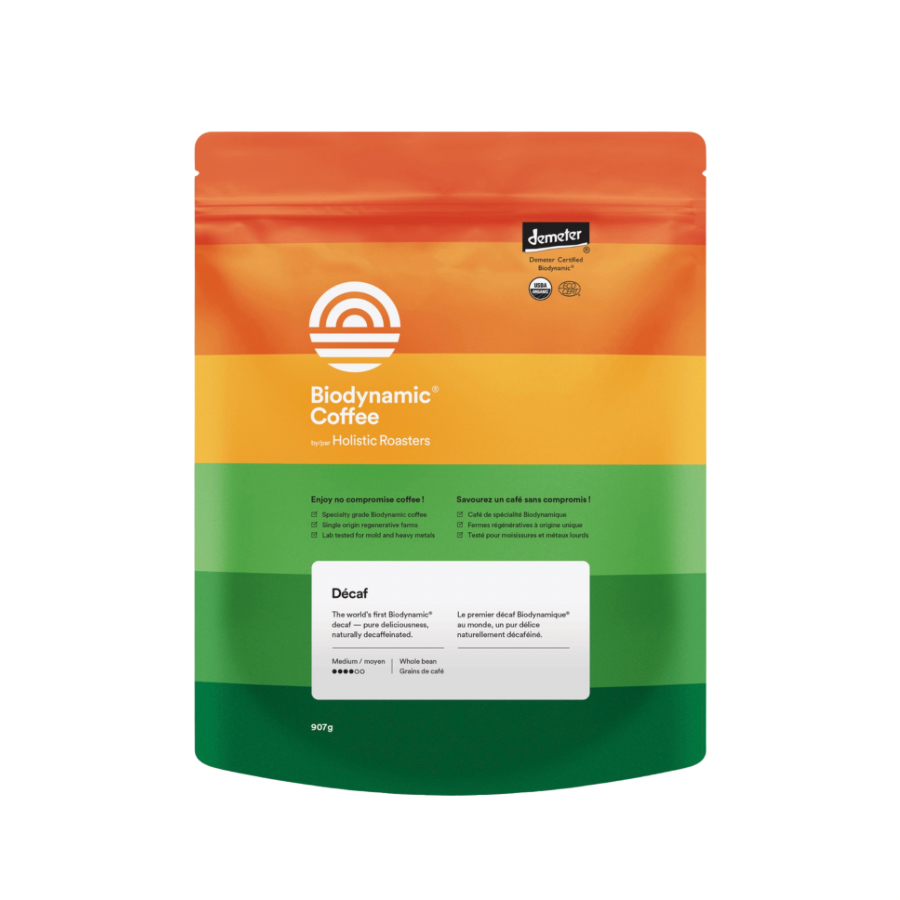
Biodynamic DECAF Coffee – 907g.
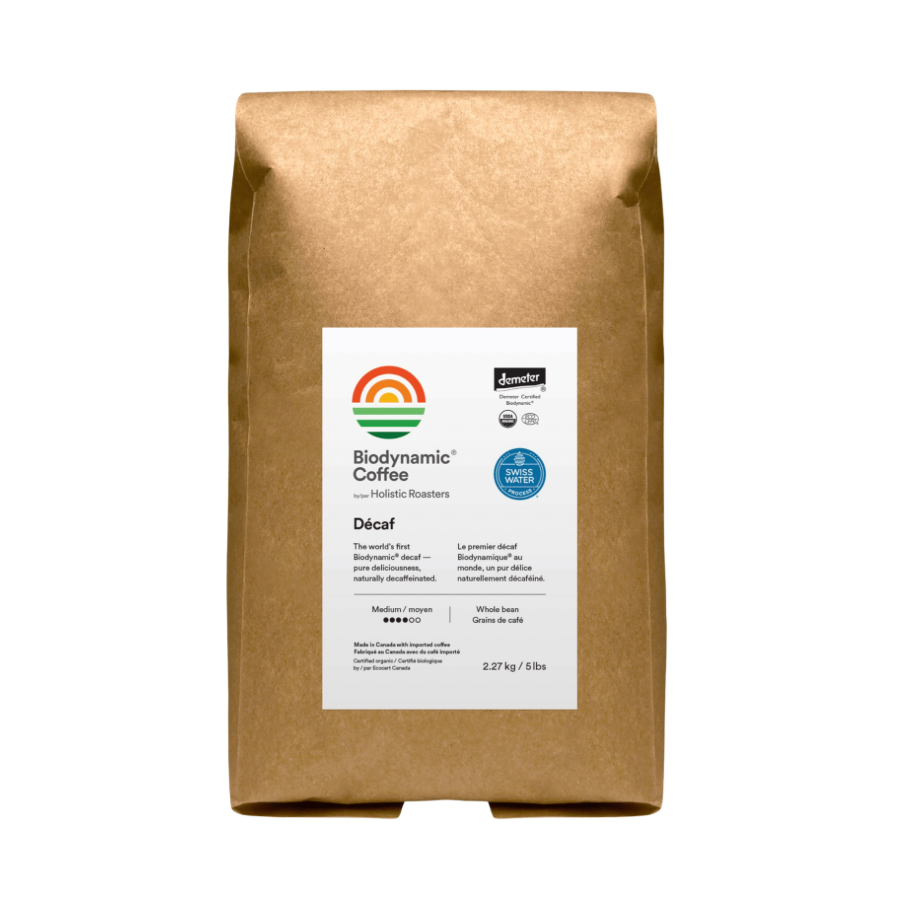
Biodynamic DECAF Coffee – 5lb.
French Roast – Dark
Rise & Shine – Medium
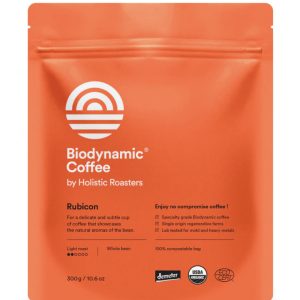
Rubicon – Light
Best Organic Decaf Coffee FAQs
Here are the answers to some of the most common questions about choosing the best organic decaf coffee, so you can make an informed, clean-living choice.
Is organic decaf coffee really chemical-free?
Organic decaf coffee is grown without synthetic pesticides, herbicides, or chemical fertilizers, making it far cleaner than conventional coffee. However, not all decaf coffees are created equal — some may still be processed with chemical solvents during decaffeination. That’s why when looking for the best organic decaf coffee, it’s important to choose a brand that uses Swiss Water Process decaffeination or other chemical-free methods. This ensures every cup is both organic and free from harmful chemicals, supporting a healthier daily coffee ritual.
What is the healthiest way to decaffeinate coffee?
The healthiest way to decaffeinate coffee is using chemical-free processes, like the Swiss Water Process or water-based methods that remove caffeine without solvents. These methods preserve the flavor and antioxidants in the coffee while keeping it free of potentially harmful residues. For anyone searching for the best organic decaf coffee, choosing beans decaffeinated through Swiss Water or biodynamic processes is the safest way to enjoy decaf without compromising wellness.
Is Swiss Water Process better than CO2 decaf?
Both Swiss Water Process and CO2 decaffeination is chemical-free. But, the Swiss Water Process is widely regarded as the cleanest method, especially for wellness-conscious coffee drinkers. It uses only water and time to gently remove caffeine while preserving the beans’ natural flavors and nutrients. CO2 decaf can also be safe, but it requires more specialized equipment. It also may not always guarantee the same level of purity. If you want the best organic decaf coffee that’s smooth, mold-free, and chemical-free, Swiss Water Process is the most trusted option.
Is biodynamic coffee worth it?
Yes! Biodynamic coffee goes beyond organic by combining chemical-free farming with holistic, regenerative practices. This approach enhances soil health, reduces toxins, improves bean quality, and supports sustainable ecosystems. Biodynamic is for clean living enthusiasts, hormone-conscious individuals, and anyone seeking the best organic decaf coffee. Biodynamic options deliver cleaner, more nutrient-rich beans with richer flavor. All while supporting a more sustainable and mindful coffee culture. It’s truly the gold standard for wellness-focused coffee lovers.
A few more articles you may enjoy:
- The Best Organic Coffee Brand: Biodynamic Coffee
- Cowboy Colostrum vs ARMRA Colostrum: Which Is Better for Your Health?
- The Best Clean Whey Free Protein Powder: My Experience with Equip Prime Protein
- Ogee vs Merit Makeup: Which Clean Beauty Brand Is Worth It?
** PIN the image below to save this post for later **



No Comments